Asphalt Maintenance
Driveway Cracks in Westchester: Repair, Sealcoat, or Resurface?
May 22, 2026 · Owner
Every spring our phone starts ringing about driveway cracks. Some are hairline. Some are wide enough to put a finger in. Most homeowners are bracing to be told they need a full resurface — and most of the time, they don't.
Here's the framework we use on every site walk.
Step 1: Measure the cracks
Crack width is the single biggest signal.
- Under ¼ inch — Hairline. Often caused by surface shrinkage, harmless on their own. Sealcoating with crack filler is usually enough.
- ¼ to ½ inch — Routine repair territory. We rout the crack to a clean V, fill with hot rubberized crack sealant, and let it set.
- ½ to 1 inch — Structural attention required. Often means water has been getting underneath. We assess the base before recommending fill.
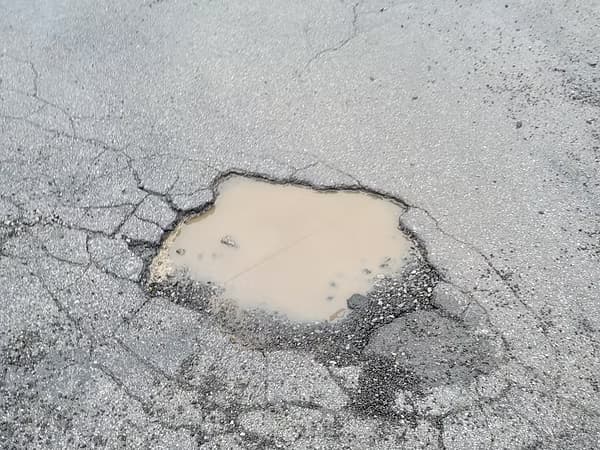
- Over 1 inch, or alligator pattern (cracks branching in interconnected sections) — The base has likely failed. Filling won't hold. This is resurfacing territory.
Step 2: Estimate the percentage of the driveway affected
Even if individual cracks are narrow, if more than 25% of the surface area is cracked, the asphalt has reached the end of its serviceable life. Patching the worst spots won't slow the failure — water will keep finding new entry points.
Under 25% surface area cracking, repair-and-sealcoat is usually the right call. Above 25%, plan for resurfacing within the next 1–2 seasons.
Step 3: Check what's underneath
A solid base of compacted gravel under the asphalt is what keeps a driveway flat. If the base has shifted (from a long-ago tree root, settling soil, or poor original installation), no amount of patching the surface will hold. We probe suspect areas with a steel rod — if it sinks in easily, the base is compromised.
The three paths
Repair + sealcoat. Best for: cracks under ½ inch, under 25% of the surface affected, solid base. Cost-effective. Done in one day. Buys you 2–3 more years before the next sealcoat, plus another 10+ years of useful life with proper maintenance.
Resurface. Best for: alligator cracking, wide cracks, soft base, or driveways over 20 years old that have been allowed to deteriorate. Removes the top 1.5–2 inches of failed asphalt and replaces it with new. Done over 1–2 days. Should last 15–20+ years with regular sealcoating.
Full removal and repave. Best for: severe base failure, drainage problems, total structural rebuild. The whole driveway comes out, the base is rebuilt or replaced, then new asphalt goes down. Multi-day project. Reserved for situations where resurfacing won't hold.
What we won't do
We won't sealcoat over wide cracks. Sealer is a thin protective layer — not a crack filler. Putting sealcoat over a half-inch crack hides it for a week, then the crack reappears wider than before because water continued to work underneath. Cracks get routed and filled first, then we sealcoat.
We also won't recommend resurfacing if a $400 repair will get you another five years. There's no point in selling a job you don't need.
If your driveway has cracks you're not sure about, send us photos and the rough age of the driveway or call 914-539-2981. We'll give you our honest read on whether you need a repair, a sealcoat, or a full resurface — no pressure either way.