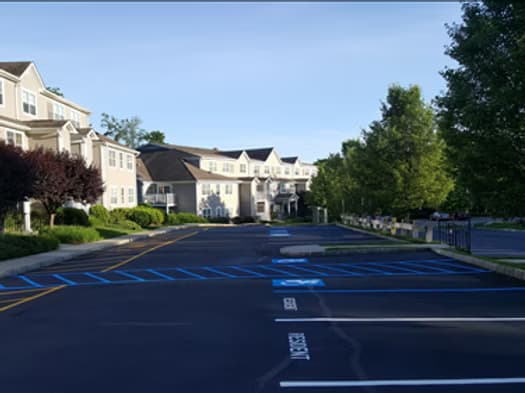
Commercial
Commercial Parking Lot Sealcoating: A Property Manager's Schedule
May 22, 2026 · Owner
A commercial parking lot is a marketing surface. It's the first thing customers, guests, and tenants see — and faded paint, potholes, and cracked asphalt send a message you don't want to send.
We've worked on lots for Holiday Inn, Dunkin', Chestnut Market, and a number of apartment complexes and retail centers across Westchester County. The pattern that works is the same across all of them: a consistent maintenance schedule beats sporadic emergency repair every time.
The 12-month schedule
Here's what we recommend to commercial property managers in Westchester:
Spring (March–April)
- Inspection walk after winter
- Crack-fill any new cracks or widened existing cracks
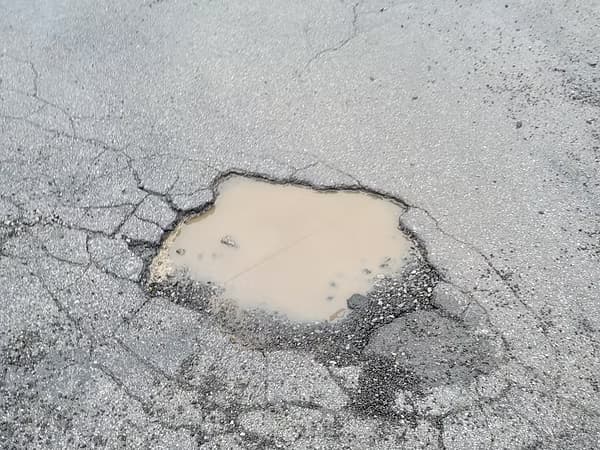
- Patch any potholes that developed over winter
- Inspect catch basins and drainage
Summer (June–August)
- Sealcoat heavy-traffic lots annually if not done last fall
- Re-stripe any faded markings before the back-to-school rush
- Curb paint refresh (yellow, red, blue) where required by fire code
Fall (September–October)
- Final sealcoat window before winter
- Pre-winter crack-fill (close every gap before freeze-thaw season)
- Drainage check before leaf-fall blocks catch basins
Winter (November–February)
- Storm response: snow plow damage repair as needed
- Spring planning: budget and schedule the next season's work
Sealcoat cadence
For most commercial lots in Westchester:
- Light traffic (small office, apartment complex) — every 2–3 years
- Medium traffic (retail strip, restaurant) — every 18–24 months
- Heavy traffic (hotel, grocery, gas station, high-turnover retail) — annually
Striping cadence
- Latex traffic paint — re-stripe every 12–24 months
- Thermoplastic — re-stripe every 3–7 years (worth the extra cost for high-traffic lots)
- ADA spaces — verify width, signage, and access aisle compliance at every re-stripe
Why this matters
A lot that gets sealcoated and re-striped on schedule:
- Avoids accelerated failure. Surface in good condition lasts decades. Surface that's allowed to deteriorate fails in years.
- Maintains ADA and fire-code compliance. Faded ADA stalls and worn fire-lane markings are real liability exposure.
- Reduces slip-and-fall risk. Smooth, well-marked surfaces with proper drainage have fewer incidents.
- Protects brand perception. Customers notice. They don't always articulate it, but they notice.
How we schedule commercial work
Almost all of our commercial sealcoat and striping work is done overnight or weekends, so the business doesn't lose operating hours. We block sections, do the work, set up cure protection, and have the lot back open before the morning shift arrives.
For larger lots, we phase the work — half the lot one weekend, half the next — so the property is never fully closed.
If you manage a commercial property in Westchester County and you don't have a written maintenance schedule for your lot, we'll build one for you. Free site walk, written recommendations, no obligation. Call 914-539-2981 or email info@westchesterseal.com.